


ACR just landed in Vak Signals
Vak Signals brings automatic content recognition to approved audio and video catalogs — with offline recognition available now and live monitoring in beta.

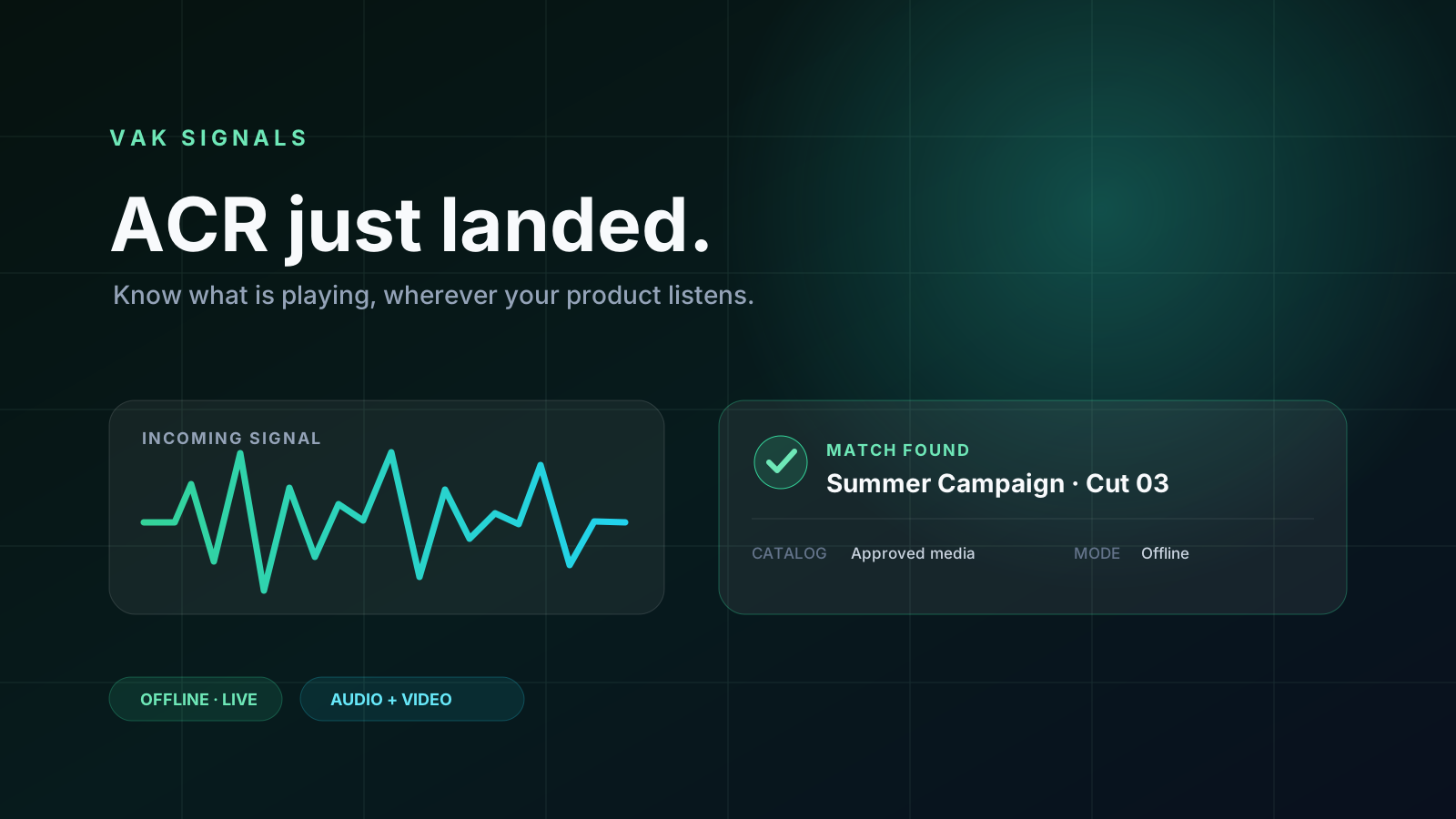
Products hear and see media all day. A television plays a campaign. A screen in a store runs an approved creative. A customer points a phone at a piece of content. Until the product can identify what is playing, those moments are just unstructured audio and video.
That changes today: automatic content recognition has landed in Vak Signals.
Vak Signals can recognize approved media from your own catalog and return useful match context to the product or monitoring workflow that needs it. Offline recognition is available now, Live is in beta, and an Online mode is coming soon.
Give your product a way to recognize media. Build a catalog in Vak Signals and bring automatic content recognition to mobile, edge, retail, and broadcast experiences.
Try Vak Signals →What ACR actually does
Automatic content recognition, or ACR, identifies known audio or video from a reference catalog. Instead of asking a person to label every capture, a product can listen, find a match, and use the result in its next step.
The important word is known. Vak Signals is built around media approved and organized by your team. You choose the catalog, labels, projects, and releases that matter to your use case. Recognition stays grounded in that controlled set rather than making an open-ended guess about arbitrary content.
That makes ACR useful for questions such as:
- Did the approved campaign play on this channel?
- Which creative is currently running on this in-store screen?
- What piece of content is this mobile experience hearing?
- When did a known asset appear in a continuous broadcast?
Offline recognition is available now
Recognition should not disappear when connectivity does. Vak Signals Offline is designed for mobile, edge, and controlled environments where a live connection may be slow, unreliable, expensive, or unavailable.
That opens up product experiences that remain responsive in the real world: inside stores, at events, on field devices, or anywhere a cloud round trip is the wrong dependency. Teams can publish controlled catalog releases and keep deployed recognition content current as campaigns change.
Offline is also a useful privacy boundary. Media can be recognized where the experience runs, without making a permanent internet connection a prerequisite for the interaction.
Live monitoring is in beta
Some workflows are not single recognition moments. They are always on.
Vak Signals Live is in beta for continuous sources such as television, radio, streams, and other channels that need ongoing monitoring. It gives teams a foundation for following known campaigns and creative variants over time, without turning every hour of media into a manual review queue.
For broadcast teams, this makes recognition operational: connect a source, monitor for approved media, and carry match context into reporting or verification workflows.
Built for catalogs, not loose files
Recognition quality is only one part of a usable ACR system. The media around it changes: new campaigns launch, old creatives retire, different products need different catalogs, and multiple people need to manage the work.
Vak Signals treats that operating layer as part of the product:
- Organizations and projects keep teams and use cases separated.
- Labels and catalogs give known media a clear identity.
- Controlled releases let teams publish updates when campaign content changes.
- Role-based collaboration gives each person the access their work requires.
The result is not just a matching endpoint. It is a workspace for keeping recognition content organized and ready to deploy.
Where ACR becomes useful
The same recognition foundation can support very different products:
- Retail media verification can confirm that approved audio or video played across in-store screens and speakers, including locations with unreliable connectivity.
- Mobile experiences can react to known media in second-screen interactions, campaigns, and media-aware applications.
- Broadcast monitoring can recognize campaigns and creative variants across television, radio, streaming, and other captured channels.
- Connected devices can identify media at the edge where response time, privacy, and reliability matter.
What happens after a match is up to the product: open an experience, record a verification, enrich an event, or trigger a workflow.
Three modes, one recognition layer
Vak Signals is being built around three deployment modes:
- Offline — available now: recognition without depending on a live connection.
- Live — beta: continuous recognition for always-on channel monitoring.
- Online — coming soon: centrally managed recognition for connected products and cloud-assisted experiences.
Different environments need different tradeoffs, but teams should not have to rebuild their media operations for each one. The catalog and recognition model stay consistent while the deployment mode fits the product.
A signal your product can act on
Audio and video become much more useful when software can identify them in context. ACR turns a passing piece of media into a structured signal: this known asset is playing here, now.
That is what just landed in Vak Signals — private media recognition built for real product environments, from an offline mobile interaction to an always-on broadcast feed.
Want your product to recognize what is playing?
Try automatic content recognition with Vak Signals.