

Why uptime monitoring needs to go deeper than pings
A green port check does not mean your product is healthy. Vak Uptrail is built for real database, queue, endpoint, and cron monitoring — with team roles, an audit log, and white-label status pages.

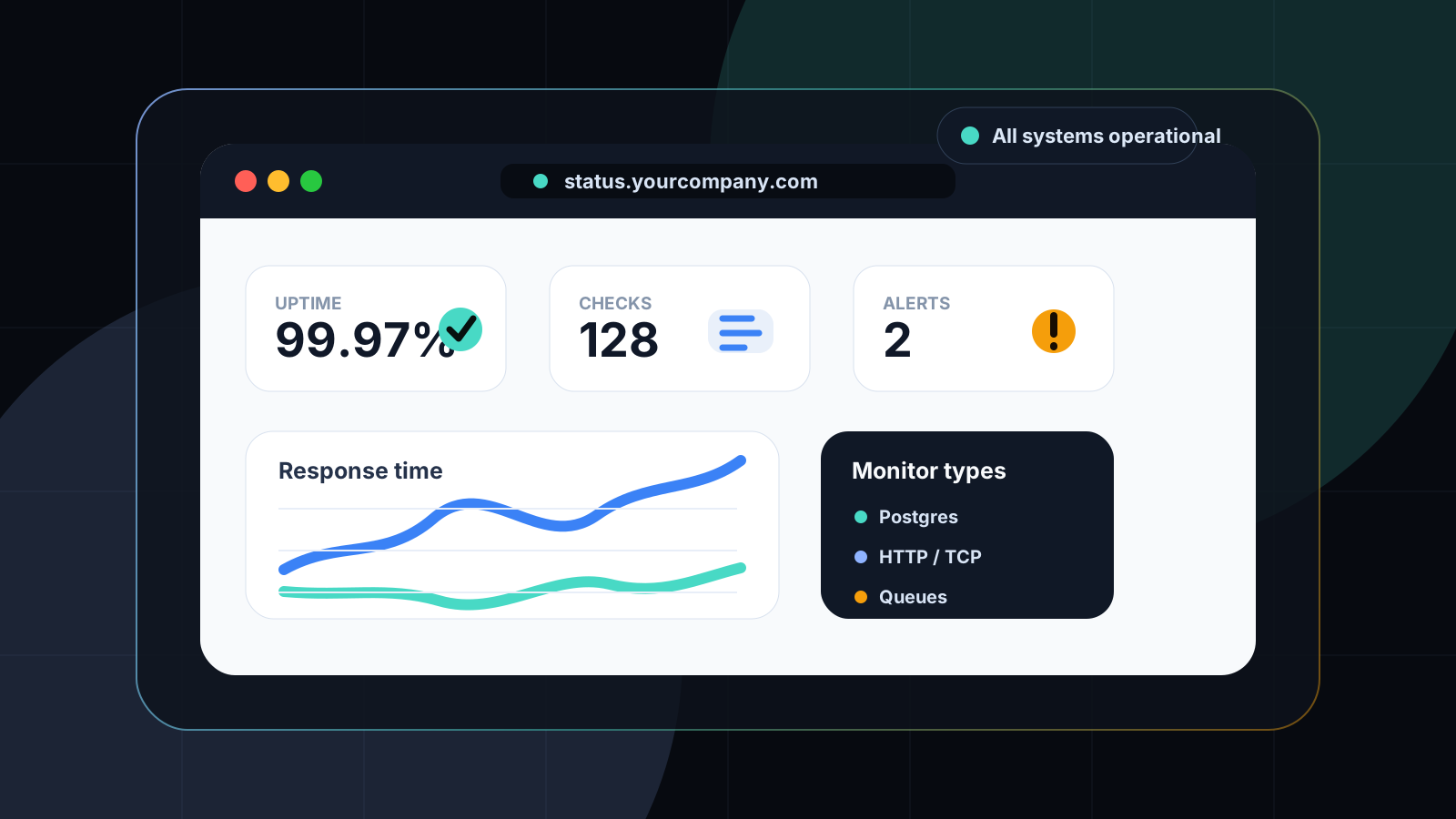
Most uptime monitoring starts with a simple question: did the endpoint respond?
That is useful, but it is also incomplete. A product can return 200 OK while the database
is slow, a queue is stalled, a background worker is failing, or the response body no longer
contains the data customers actually need. From the outside, the service looks alive. From
the customer’s point of view, it is already broken.
Vak Uptrail is built around a more practical idea: monitor the things your product truly depends on, then publish the truth clearly when something changes.
Monitor the stack customers actually depend on. Vak Uptrail watches databases, queues and endpoints with white-label status pages and Slack/email alerts.
Explore Vak Uptrail →A port check is not a health check
Opening a TCP port only proves that something is listening. It does not prove the service can authenticate, answer correctly, or return the result your workflow depends on.
For databases, that difference matters. A PostgreSQL instance can accept connections while a critical query is slow. A MySQL database can be reachable while the table your app needs is locked. Redis can accept a connection while the command your workflow needs is failing.
Real monitoring should run real checks. It should ask the database a meaningful question, measure the answer, and alert when the answer fails or drifts.
Monitor the stack, not just the website
Modern products are stitched together from databases, queues, APIs, workers, and internal services. If any one of those pieces silently degrades, customers feel it before a basic homepage check notices.
Vak Uptrail is designed to watch the operational layer directly:
- PostgreSQL and MySQL with actual queries
- Redis connectivity and command checks
- HTTP and HTTPS endpoints with status, latency, redirects, and TLS health
- TCP services for internal daemons, brokers, caches, and other infrastructure
- NATS and other queue-style systems where stalled events can break whole workflows
- Custom checks when your system has its own definition of healthy
The goal is not more checks for the sake of more checks. The goal is signal that matches how your product actually works.
Cron jobs deserve monitoring too
Some of the most damaging outages are not loud. A nightly billing rollup that quietly stops running, a sync job that goes silent, a cache warmer that skips a beat — none of these trip a homepage check, but all of them cause real problems by morning.
Cron monitoring closes that gap. Vak Uptrail can schedule and fire your jobs over NATS or HTTP, then track each run through its start, ping, and stop reports. A run that fails, runs late, or never reports at all is marked missed and alerted on — so the job that quietly stopped is the first thing you hear about, not the last.
The status page shows full cron run history alongside service health, which makes scheduled work a first-class citizen instead of an invisible background process.
Alert the right people, not everyone
An alert should help a team move faster. Too often, alerting becomes noise: every failure goes to the same inbox, every recovery gets lost, and teams start ignoring the thing that was supposed to protect them.
Good uptime monitoring needs routing. Database checks may belong in the platform channel. Customer-facing outages may need support and leadership. A recovery notice should be just as clear as the failure notice, because the team needs to know when the incident is over.
Vak Uptrail supports email and Slack alerts so status changes land where the team already works.
Graphs should explain the incident
When something breaks, teams need more than a red badge. They need to see when the issue started, how long it lasted, what changed, and whether it was a hard outage or a slow degradation.
Granular graphs make that visible. Response time over time, availability by monitor, failure history, p95 latency, and incident timelines all help the team answer the same questions faster: what happened, who was affected, and is it fixed?
That history is also useful after the incident. It turns “we think it was slow yesterday” into a concrete timeline the team can learn from.
Your status page should look like your product
Status pages are public trust surfaces. If customers click from your product to a page that looks like someone else’s brand, the experience feels outsourced at exactly the wrong moment.
Vak Uptrail is fully white-label. Your logo, your colors, your copy, your domain. The page can be public for customers or private for internal teams, but either way it should feel like part of your company.
Self-hosting matters for monitoring
Monitoring touches sensitive systems. It may need database credentials, internal endpoint access, queue checks, or details about infrastructure that should not leave your control.
That is why Vak Uptrail can be self-hosted. The checks run in your environment, close to the services they watch. Credentials stay with you. Results stay with you. The status page is yours.
Managed deployment can still be useful for teams that want Vak to host and maintain the product, but the foundation is ownership.
Monitoring is a team sport
Monitoring is rarely one person’s job. On-call engineers, platform owners, support leads and managers all need different levels of access — and handing everyone the keys to production monitoring is its own kind of risk.
Vak Uptrail is built for a whole team. Users get admin, editor, or viewer roles managed from an in-app console: viewers read dashboards, editors change monitors and crons, and admins manage people and access. You can run it invite-only or let your domain in as viewers, and every change — to monitors, groups, crons, or users — is recorded in an admin audit log.
That combination of roles and audit history means you can delegate monitoring confidently, and always answer the question of who changed what, and when.
Uptime is a promise customers can see
Monitoring is not only an engineering tool. It is part of the promise a company makes to its customers.
When everything is healthy, a good status page quietly builds trust. When something breaks, it shows the team is paying attention, communicating clearly, and taking responsibility.
That is the point of Vak Uptrail: deeper checks, sharper alerts, clearer history, and a status page that carries your brand with confidence.
Want monitoring that goes deeper than pings?
See Vak Uptrail in production.